Brooch Care: How to Clean and Preserve Your Jewelry
By the Alyvoa teamShare
A beautiful brooch can stay by your side for years, as long as you give it a few simple, regular gestures. Caring for a vintage brooch is nothing intimidating: you simply need to recognize the material you are wearing and adapt the cleaning accordingly. Bright enamel, cut crystals, lustrous pearls or stainless steel do not react the same way to water, perfume or friction. This guide walks you through it material by material, from cleaning to storage, right down to the proper way to pin without marking the fabric.
Why brooch care makes all the difference
A piece of jewelry lives in contact with skin, perspiration, perfume and the surrounding air. Over time, an invisible film settles on the surface: it is what dulls the sparkle of crystals and clouds the luster of pearls. The good news is that this deposit comes off easily when you act early and gently. The other enemy of a vintage brooch is knocks and friction: stored loose together, two pieces scratch each other, a rhinestone can come unset, a clasp can bend. The essence of brooch care therefore comes down to two complementary habits: cleaning it properly, then storing it properly. With these reflexes, you considerably extend the life of each piece.
Cleaning an enamel brooch without scratching it
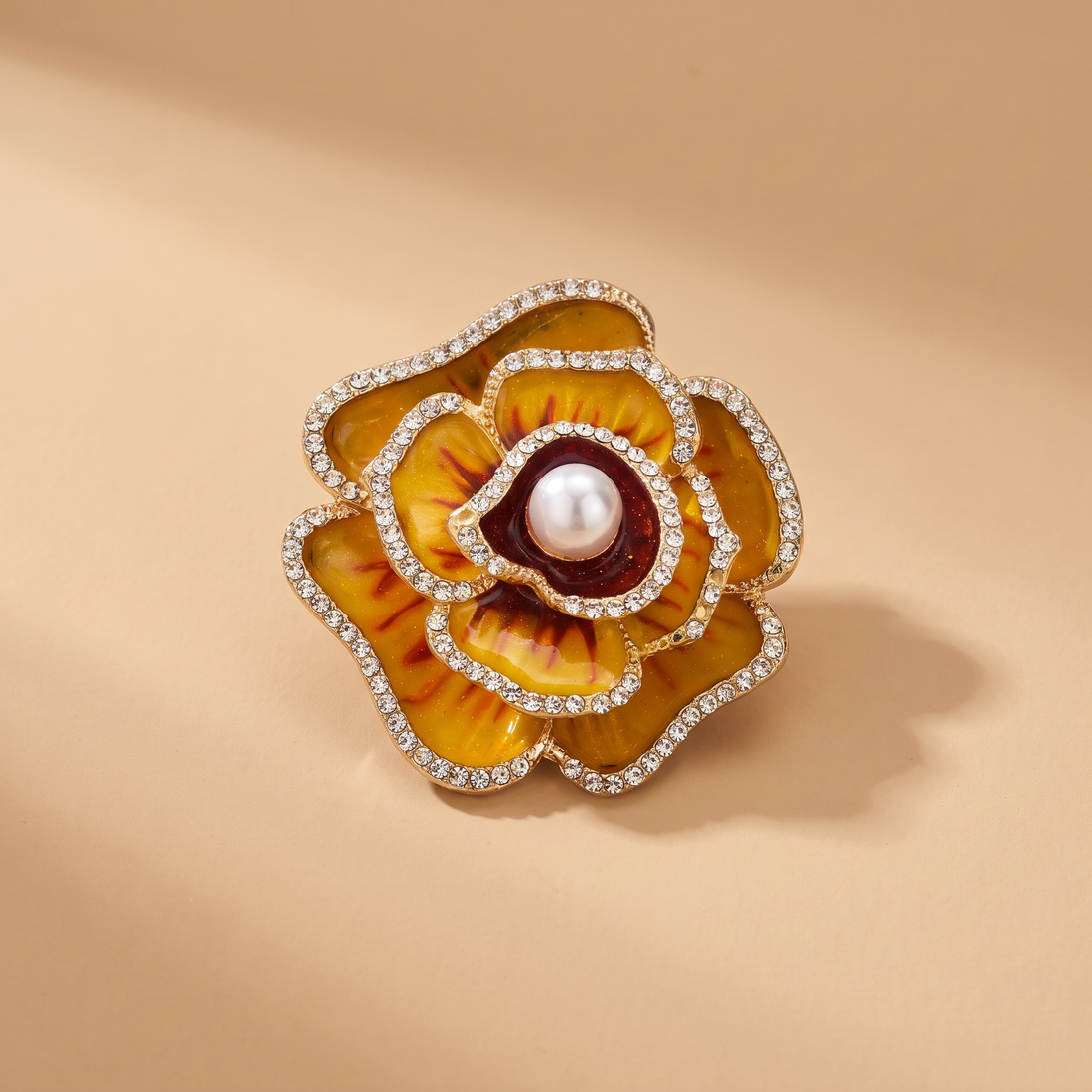
Enamel, whether it adorns a flower, a colorful butterfly or a graphic motif, is a vitrified material, smooth and glossy. It hates two things: abrasive products and knocks. To clean it, start by wiping it with a soft, dry cloth, ideally microfiber, to remove everyday dust. For stubborn marks, barely dampen the cloth with lukewarm water and a drop of neutral soap, then wipe straight away and dry without waiting. Never let water sit around the settings of an enameled brooch. Ban alcohol, acetone and scouring powders, which can permanently dull or scratch the surface. This gentle cleaning preserves the depth of color and the lacquered finish that give vintage enamel all its charm.
Caring for cut crystals and rhinestones
Crystals give a brooch its sparkle, but they are also the material that clouds over fastest: the slightest greasy film breaks their brilliance. Caring for a crystal brooch, such as a star motif or a glittering insect, mostly calls for a delicate touch. Dust it first with a very soft brush; a clean makeup brush is perfect for reaching every facet. To revive the sparkle, gently rub each stone with a slightly damp cloth, then dry immediately. Avoid soaking the brooch: water can seep under set or glued stones and weaken their hold. Finally, keep crystals away from perfumes and hairsprays, which form a matte film that is very hard to remove. The right reflex: perfume your skin before pinning on the brooch, never the other way around.
Taking care of pearls and mother-of-pearl
Pearls, even imitation ones, are among the materials most sensitive to chemicals. Their pearly surface does not tolerate alcohol, perfume or household cleaners, which can dull or chip it. The gentlest care is more than enough to keep them radiant on a vintage brooch. Wipe the pearls after each wear with a soft, dry cloth to remove the film left by skin and perspiration. Never use soapy water for soaking or any abrasive product. Then store your pieces flat, away from direct light, to preserve their original tone. The golden rule for pearls is easy to remember: they go on last when you get dressed, and come off first when you undress.
Stainless steel: sturdy but not indestructible
Stainless steel is the most forgiving material for an everyday brooch. It does not oxidize easily and handles water well, which makes it a reliable ally for graphic motifs and clean silhouettes. To care for it, lukewarm water, a drop of mild soap and a cloth are all you need: rinse, dry thoroughly, and the polished shine returns at once. Simply avoid abrasive sponges and scouring pads, which would leave lasting marks on the finish. Also remember to check the added elements regularly, such as pearls or crystals set on the steel: these should still be treated with the precautions described above. Although resistant, the steel of a vintage brooch always benefits from being wiped after wear to stay flawless season after season.
Storing and pinning your brooches to preserve them
Storage is half the work of preserving a brooch. Store each piece separately, in a small fabric pouch or a dedicated compartment, so the brooches do not knock together and scratch each other. Slip a moisture-absorbing sachet next to crystal and pearl models, and stay away from the bathroom, where steam speeds up tarnishing. To pin without damaging fabric, favor tight weaves such as wool, denim or coat fabric; on a delicate textile, line the inside with a small square of felt for the pin to pass through instead of the visible garment. Pin along the grain of the fabric, in small stitches, and always close the secure clasp that protects the point and keeps the brooch upright.
With these few gestures, enamel keeps its shine, crystals sparkle and pearls keep their luster, year after year. Caring for a vintage brooch ultimately comes down to three reflexes: wipe after wearing, store each piece on its own away from moisture, and perfume your skin before pinning. You are now ready to make your favorite pieces last and to dare to adopt new ones. Discover the motifs that feel like you in our collection of brooches by Alyvoa, shipped with their secure clasp.
Frequently asked questions
How often should you clean a brooch?
A quick wipe with a soft cloth after each wear is enough for most brooches. A more thorough clean, suited to the material, is only needed a few times a year or as soon as the shine looks dull. No need to overdo it: gentleness and regularity beat one big aggressive cleaning.
Can you rinse a brooch under tap water?
It depends on the material. Stainless steel can take a quick rinse, but avoid immersing brooches with glued crystals or pearls, as water can seep under the stones and weaken their hold. When in doubt, always choose a barely damp cloth over a full bath.
How do you revive crystals that have gone dull?
First dust each facet with a very soft brush or a clean makeup brush, then gently rub the stones with a slightly damp cloth and dry immediately. Avoid any chemical product. Keeping crystals away from perfume and hairspray is often enough to preserve their brilliance for longer.
Does perfume really damage brooches?
Yes, especially pearls and crystals. Perfume and hairspray leave a film that dulls mother-of-pearl and clouds the sparkle of stones. The right reflex is to apply perfume and let your skin dry before pinning on the brooch, so it never receives the product directly.
How do you pin a brooch without making a hole?
Choose a tightly woven fabric such as wool, denim or a coat, and pin along the grain in small stitches without forcing. On a fine textile, line the inside with a square of felt for the pin to pass through instead of the garment. Always close the secure clasp.
Can enamel brooches chip?
Enamel is resistant but remains sensitive to knocks and abrasive products. Avoid banging the piece, storing it loose with other jewelry, or using alcohol or acetone. With a simple soft cloth and individual storage, an enamel brooch keeps its smooth surface for a very long time.
How should you store brooches when you have many?
Pin them onto a piece of felt or cork placed in a drawer: they stay visible, flat and protected from knocks. For your most precious pieces, an individual pouch remains ideal. What matters is that they do not touch each other, to avoid scratches and bent clasps.
Do you need a special product to clean a brooch?
No, in the vast majority of cases. A soft, dry cloth, sometimes with a drop of neutral soap diluted in lukewarm water, is enough. On the contrary, avoid household cleaners, alcohol and abrasive powders, which do more harm than good to the delicate materials of vintage brooches.
Do imitation pearls require extra precautions?
Yes, their pearly surface is fragile when faced with chemicals. Simply wipe them with a dry cloth after wearing, without soapy water or any product. Store them flat, away from light, and put them on last when getting dressed to limit contact with perfume and cosmetics.
What should you do if your brooch clasp becomes loose?
A slightly loose clasp can often be gently tightened by hand, without forcing, so that it holds the point again. Check that it works properly before wearing the piece. If the clasp remains faulty, it is best not to wear the brooch until it has been adjusted.